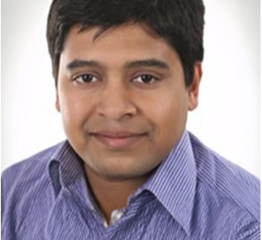
Invited TALK 1
Subhamoy Mandal
School of Medical Science and Technology, Indian Institute of Technology
Talk Title:Augmented Intraoperative Imaging – making surgeries safer
Bio: Dr. Subhamoy Mandal is an Assistant Professor at the Indian Institute of Technology Kharagpur, where he leads the Medical Imaging and Theragnostics Laboratory (MITLab). He is also a Visiting Faculty Fellow at the Technical University of Munich. His research operates at the intersection of medical imaging, biomedical signal processing, and physics-informed computational frameworks, with a primary focus on translational point-of-care technologies, magnetic resonance, and photoacoustic imaging.
Prior to joining IIT Kharagpur, Dr. Mandal conducted advanced research in augmented reality–assisted surgery and translational molecular imaging in Germany at the German Cancer Research Center (DKFZ) and the Erbe Group. He earned his Ph.D. from the Technical University of Munich and Helmholtz Zentrum München. Dr. Mandal was DAAD Research Ambassador (2022-25), and recipient of DAAD PhD Scholarship, British Commonwealth Fellowship, IEEE Student Enterprise Award, IEEE CS Richard E. Merwin Student Award, European Society of Radiology “Rising Star Award”, among others.
Dedicated to bridging engineering precision with clinical translation, Dr. Mandal actively develops multidisciplinary, accessible healthcare solutions aimed at improving patient care.
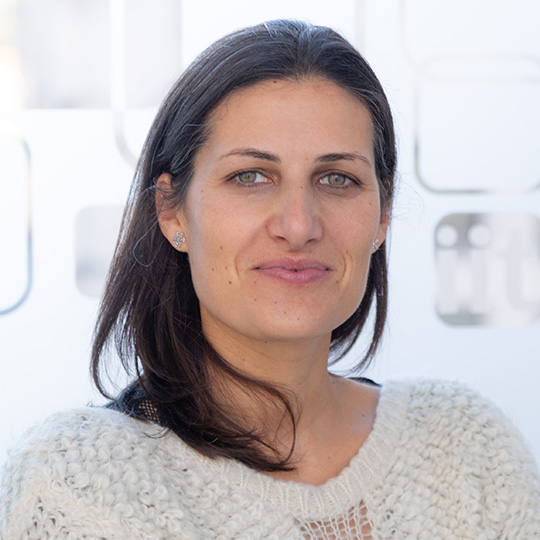
INVITED TALK 2
Marianna Semprini
Istituto Italiano di Tecnologia, University of Genova, Italy
Talk Title: Quantifying Motor Function: Multimodal Biomarkers for Neurorehabilitation
Marianna Semprini got a BS in Biomedical Engineering and a MS in Bioengineering (Neuroengineering curriculum) both at the University of Genoa (Italy) in 2004 and 2007 respectively. In 2007 she was research fellow at Northwestern University (Chicago, IL, USA). In 2011 she received a PhD in Robotics, Neurosciences and Nanotechnologies from the Istituto Italiano di Tecnologia (IIT).
Her career drives have revolved around a central topic: restoring or replacing motor functions by reconnecting the brain with the environment. Over 10 years, she has specialized in signal recording and sensory stimulation, gaining expertise in sensorimotor system and translational potential of neurotechnology.
She currently coordinates the research activities of the IIT-INAIL Rehab Technologies Lab of Italian Institute of Technologies and leads a multidisciplinary research team working on technology-based motor rehabilitation. Her current interests are neurorehabilitation, neuroprostheses and neural control of movement.
She actively contributes to the scientific community by serving as a scientific evaluator for international projects and as a member of the editorial boards of several journals.
She is also an active advocate of equity, diversity and inclusion within the scientific community, having organized several events as part of IEEE Women in Engineering.
In the field of motor neurorehabilitation, accurately tracking motor performance and neural activity is crucial for understanding and monitoring sensorimotor recovery. The use of kinematics, electromyography (EMG), and brain activity analysis provides clinicians and researchers with precise, objective patient’s measurements. These measurements not only allow for the objective monitoring of progress but also facilitate the evaluation of treatment effects and the customization of interventions based on individual patient needs. Moreover, they can be used for quantifying technical performance of rehabilitation devices and their impact on the user. Such measures can be effectively considered as biomarkers, i.e. “indicators of the normal biological processes, pathogenic processes, or responses to an exposure or intervention, including therapeutic interventions accurately and reproducibly measured from outside the patient”, as defined by the Biomarkers Definitions Working Group .
Several initiatives have been proposed to create frameworks based on biomarkers to facilitate the transition of rehabilitation devices from labs to real-world applications. However, there is still a gap in instrumented biomarkers development for motor rehabilitation. In order to better understand the healthy and impaired functions and to capture the rehabilitation progress, the development of biomarkers needs to address how real-world behavior emerges from the interaction between the neural, biomechanical, and environmental dynamics. This requires multi-modal measures that collectively contribute to the computation of biomarkers from relevant biological features..
In my talk I will first discuss the challenges that must be faced by research in biomarkers for neurorehabilitation. I will then present a framework for assessing upper limb movements by means of neuromechanical biomarkers based on electroencephalographic and electromyographic signals. Finally, I will discuss the implications of my work for standardization of assessment in neurorehabilitation.
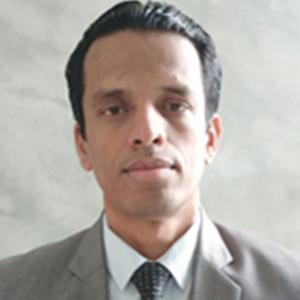
INVITED TALK-03
Ruwan Gopura
University of Moratuwa, Sri Lanka 10400
5th Sept 4:00 PM
Biography
Ruwan Gopura earned his B.Sc. Eng. degree with honors in Mechanical Engineering in 2004, followed by an M.Eng. degree in Manufacturing Systems Engineering, both from the University of Moratuwa, Sri Lanka. He later pursued a Ph.D. in Robotics and Intelligent Systems at Saga University, Japan, in 2009. Subsequently, he engaged in postdoctoral research in bio-robotics at the same institution. Currently, he is a Senior Professor in the Department of Mechanical Engineering at the University of Moratuwa and serves as the Dean of the Faculty of Graduate Studies in the same University.
Prof. Gopura played a pivotal role as the founding Head of the Department of Medical Technology in the Faculty of Medicine at the University of Moratuwa. He also held the position of Director/Research at the university from February 2021 to January 2024. His past leadership roles include serving as the Head of the Department of Mechanical Engineering. Prof. Gopura is recognised for his expertise in developing bionic devices, such as robotic prostheses, orthoses, and exoskeletons. He has authored over 185 research articles, including publications in peer-reviewed journals and conferences, and holds multiple patents.
In addition to his academic contributions, Prof. Gopura serves as an academic editor for several journals. He was the chairperson of the IEEE Sri Lanka Section in 2020 and the IEEE Robotics and Automation Society Sri Lanka Section from 2017 to 2020. He was also the secretary of the IEEE Sri Lanka Section in 2015 and the IEEE Robotics and Automation Society Sri Lanka Section from 2012 to 2017. He is one of the distinguished lecturers in IEEE EMBS for 2025-2026. His work has been acknowledged with numerous research awards and grants.
Talk Title
Assistive Robotics for Sustainable Healthcare: From Engineering Innovation to Human-Centred Care
Abstract
The rapid advancement of robotics technology is opening new frontiers in healthcare, with assistive robots increasingly emerging as collaborative partners for medical professionals, including physicians, nurses, and therapists. Rather than replacing human expertise, these robotic systems are designed to augment human capabilities by enhancing precision, efficiency, and safety, while reducing the physical and cognitive burden placed on healthcare professionals. In this context, assistive robots represent a significant convergence of engineering innovation and medical technology, with the potential to contribute substantially to more sustainable, resilient, and human-centred healthcare systems.
The talk will first introduce the emerging landscape of assistive robots for healthcare and examine their applications in clinical and rehabilitation settings. Their potential to reduce professional workload, improve the quality and consistency of care, and optimise the utilisation of healthcare resources will then be discussed. Particular emphasis will be placed on the contribution of assistive robotics towards achieving the United Nations Sustainable Development Goals (SDGs).
The talk will conclude by highlighting recent developments from the Bionics Laboratory at the University of Moratuwa, showcasing innovative robotic solutions developed to address real-world healthcare challenges. These include a surgical assist robot designed to support surgeons during medical procedures, a physiotherapy assist robot for repetitive rehabilitation tasks, and a prehospital treatment robot aimed at assisting in the management of traumatic bleeding wounds.
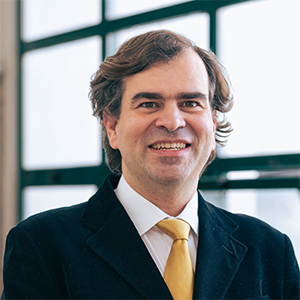
INVITED TALK-04
Hugo Silva
University of Lisbon, Portugal
5th Sept 4:45 PM
Short Bio:
Hugo Plácido da Silva
Hugo is an award-winning inventor, researcher, and entrepreneur, having co-founded multiple innovative technology-based companies, operating in the fields of biomedical devices and data science for healthcare and quality of life. He obtained his Habilitation in Biomedical Engineering and completed his PhD in Electrical and Computers Engineering both from the Instituto Superior Técnico (IST), University of Lisbon (UL), where he is currently an Invited Assistant Professor. Hugo is also a Senior Researcher and Coordinator of the “Information and Data Science” thematic line at the IT – Instituto de Telecomunicações, to which he is affiliated since 2004.
Both at a technical and scientific level, he has actively contributed to and participated in more than 70 national and international projects, funded by grants from Horizon Europe, Portugal 2030, Fundação para a Ciência e Tecnologia (FCT), and several other private and public institutions (e.g. Vodafone, Nokia, and others). Hugo has 10 granted patents and published 280+ papers in peer reviewed journals, international refereed conferences, and book chapters.
His work has been distinguished both internationally and domestically with several awards, including the IEEE Entrepreneurship Impact Award, “Career Award alumniIPS”, the “Best Industrial and Enabling Technology” at the European Commission’s DG-CONNECT Innovation Radar Prize, or the Ordem dos Engenheiros Young Engineer Innovation Award, just to name a few.
Hugo is an IEEE Distinguished Lectured since 2025, IEEE Senior Member since 2018, and IEEE Member since 2010, affiliated with the IEEE Engineering in Medicine and Biology Society. Furthermore, he is an active member of the IEEE Portugal Section, where he is currently Chair of the IEEE EMBS Portugal Chapter. He has also been appointed Member of the European Laboratory for Learning and Intelligent Systems (ELLIS) / Lisbon Unit for Learning and Intelligent Systems (LUMLIS).
Title
Invisibles: A New Frontier in Biomedical Signal Acquisition and Processing
Keywords
Pervasive Healthcare; Ambient Assisted Living; Sensor Integration; Internet of Things.
Abstract
An important part of clinical triage methods continues to be mostly bound to hospital and momentary data acquisition settings. Still, a paradigm shift is emerging, in which everyday technology is increasingly capable of measuring relevant biomedical signals in a more pervasive manner. This is paving the way for systems that can better analyze and adapt to perceived changes in the health status or behavior of the user. In this lecture we will characterize the current landscape of data acquisition and signal processing methods, describe state-of-the-art work developed towards what has been coined as the ”invisibles” approach, and provide a discussion of the main challenges posed by these new methodologies. Experimental results show that data acquired using such an approach is highly correlated with data obtained through conventional methods. This lecture will show real-world examples of devices integrated into everyday use objects with which users regularly interact with.
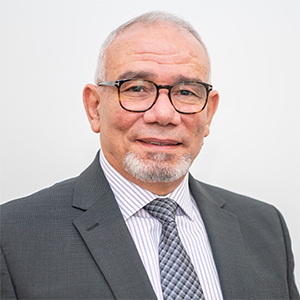
INVITED TALK-05
Hasan Al-Nashash
American University of Sharjah (AUS), United Arab Emirates
5 Sept 5:30 PM
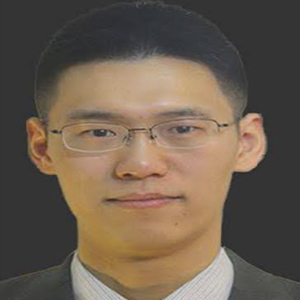
Hasan Al-Nashash (Senior Member, IEEE) is a professor, Coordinator of the PhD program in Biosciences and Bioengineering and former Director of the Biomedical Engineering MS Program, and the Department of Electrical Engineering at the American University of Sharjah. His research interests are in mental stress management, vigilance assessment and enhancement, brain source localization and assessment of spinal cord, brain injuries, flexible implantable electrodes and low power electronic devices. He designed and developed several electronic instruments to measure various biodynamic parameters. He is the author of more than 150 journal and conference papers, six book chapters and two issued US patents. He led the effort to establish the biosciences and bioengineering academic programs and research at AUS. He has been elected as a member of the EMBS-TC on Neural and Rehabilitation Engineering (NRE). He is currently the Vice Chair of the EMB Standards Committee (EMB-SC). He received a number of awards including the Roderick French Distinguished Service Award and was the keynote and invited speaker at several conferences. He worked closely with several biomedical engineering departments and hospitals including the National University of Singapore, Johns Hopkins University, and Rashid Hospital in Dubai.
INVITED TALK-06
Yuan Yang
University of Illinois Urbana-Champaign, USA
5 Sept 6 PM
Dr. Yuan Yang is an Associate Professor of Bioengineering at University of Illinois Urbana-Champaign (UIUC). He is also an Associate Professor of Clinical Imaging at Carle Foundation Hospital and Adjunct Associate Professor of Physical Therapy and Human Movement Sciences at Northwestern University Feinberg School of Medicine. He is currently leading Illinois-Carle Joint Neural Engineering and Rehabilitation Laboratory across UIUC and Carle campuses with the main research topics on developing advanced neural engineering and AI approaches for stroke rehabilitation, chronic pain management, and precision medicine for other neurological disorders. His research has been continuously funded by the National Institutes of Health (NIH), US National Science Foundation (NSF) and American Heart Association (AHA), with over 56 peer-reviewed journal publications and over 80 conference papers/presentations. He received AHA Career Development Award in 2022 and NSF CAREER Award in 2023. He is Associate Editor of Medical & Biological Engineering & Computing and was editorial board member of Frontiers in Psychology (2017-2024). He is currently serving as a TC member in IEEE BSP and IEEE Region conferences. He is a member of Sigma Xi, The Scientific Research Honor Society, one of the oldest honor societies. He has been serving as a grant reviewer for NIH, NSF, AHA, US Department of Veterans Affairs (VA), Fonds de recherche du Québec – Santé (FRQS), the Canada Foundation for Innovation’s (CFI) and Italian Multiple Sclerosis Society (AISM-FISM). He has an interdisciplinary background with his Bachelor’s and Master’s Degrees in Biomedical Engineering, and Ph.D. in Signal and Image Processing (2013). He had his postdoctoral training (2013-2017) in Bio-Mechanical Engineering at Delft University of Technology in the Netherlands. He was a faculty member at Northwestern University (2017-2020) and the University of Oklahoma (2020-2023) before he joined UIUC and Carle.

INVITED TALK-07
Dipayan Saha
Senior R&D Engineer at Caspia Technologies, USA
4 Sept 5 pm
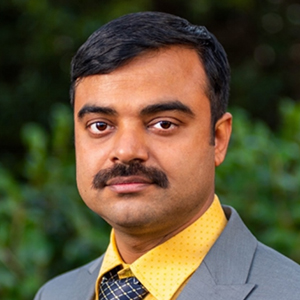
Dipayan Saha is currently working as a Senior R&D Engineer at Caspia Technologies. He received his Ph.D. and M.Sc. in Electrical and Computer Engineering from the University of Florida and his B.Sc. in Electrical and Electronic Engineering from the Bangladesh University of Engineering and Technology (BUET). His research focuses on AI-driven hardware security, with particular emphasis on LLM-assisted security verification of System-on-Chip (SoC) designs. His research also explores deep learning-based techniques for pre- and post-silicon side-channel analysis. Dr. Saha holds a U.S. patent and has published extensively in leading security journals and conferences. He serves as an active reviewer for journals published by IEEE, ACM, Springer, and Elsevier. He is a member of IEEE, ACM, and IACR.
Title: Trust Starts with Hardware: Security Vulnerabilities in Medical Electronic Systems
Abstract
Modern medical electronics increasingly rely on sophisticated hardware platforms to perform sensing, computation, communication, and safety-critical control. From wearable health monitors and diagnostic equipment to infusion pumps and implantable medical devices, these systems process sensitive information and, in many cases, directly influence patient care. While medical-device cybersecurity has traditionally received significant attention at the software and communication levels, security vulnerabilities can also originate from the underlying hardware and may remain difficult to detect once a device is deployed. This talk will explore hardware security vulnerabilities in medical electronic systems and their potential consequences for device security, data confidentiality, system integrity, and patient safety. It will discuss different classes of hardware vulnerabilities and attacks, including weaknesses in hardware access control and debug interfaces, information leakage, insecure hardware communication, side-channel leakage, fault injection, electromagnetic and sensor-level attacks, and malicious hardware modifications. Selected real-world and research-demonstrated attacks on medical electronics will be used to illustrate how vulnerabilities at the hardware and physical layers can compromise otherwise trusted systems. The talk will further discuss how security considerations can be incorporated into the hardware design and verification process, with particular emphasis on identifying security-critical assets, modeling hardware threats, and formally verifying security requirements at the Register Transfer Level (RTL). Finally, emerging opportunities for using Large Language Models (LLMs) and agentic AI to assist hardware security analysis will be presented. By examining medical-device security from the hardware upward, this talk aims to highlight the importance of hardware security as a fundamental component in building secure, resilient, and trustworthy next-generation biomedical systems.
INVITED TALK-08
Tonmoy Ghosh, Phd
AI Engineer | Ingram Content Group | Nashville, TN, USA
Talk Title: From Foundation Models to Clinical Decision Support: Fine-Tuning MedGemma for Medical Image Classification and Multimodal Healthcare AI
Abstract:
Recent advances in foundation models have transformed artificial intelligence across natural language, vision, and multimodal applications. In healthcare, Google’s MedGemma represents a new generation of medical foundation models that integrate domain-specific knowledge with multimodal reasoning capabilities. While these models demonstrate strong zero-shot and general-purpose performance, adapting them to specialized clinical imaging tasks remains a critical challenge.
This talk will explore practical methodologies for fine-tuning MedGemma for medical image classification applications, including disease screening, and diagnostic support, and medical image analysis. The talk will discuss the transition from large-scale pre-trained models to task-specific healthcare solutions through parameter-efficient fine-tuning techniques such as LoRA, and QLoRA. Particular emphasis will be placed on addressing common challenges in medical AI, including limited annotated datasets, class imbalance, and model explainability.
Drawing from experimental studies and real-world implementation experiences, the presentation will examine data preparation strategies, multimodal instruction design, training pipelines, evaluation metrics, and deployment considerations. Finally, the presentation aims to provide biomedical engineers, health informaticians, and AI researchers with practical insights into leveraging MedGemma to develop robust, scalable, and clinically meaningful medical imaging solutions.
Brief Bio
Tonmoy Ghosh received Ph.D degree from the University of Alabama, Tuscaloosa, AL, in 2022 and currently working as an AI Engineer at Ingram Content Group in Nashville, TN. He received his B.Sc. and M.Sc. in electrical and electronic engineering (EEE) from the Bangladesh University of Engineering and Technology (BUET), Bangladesh in 2012 and 2016, respectively. His research interests include applying machine/deep learning-based method to address engineering problems in images, wearable sensors, and interdisciplinary research focusing on computer-aided detection and health monitoring applications. Tonmoy Ghosh has published over 70 refereed papers and developed 4 MLOps. He is a reviewer for several journals, including IEEE, Elsevier, and other publications.

