Day 1
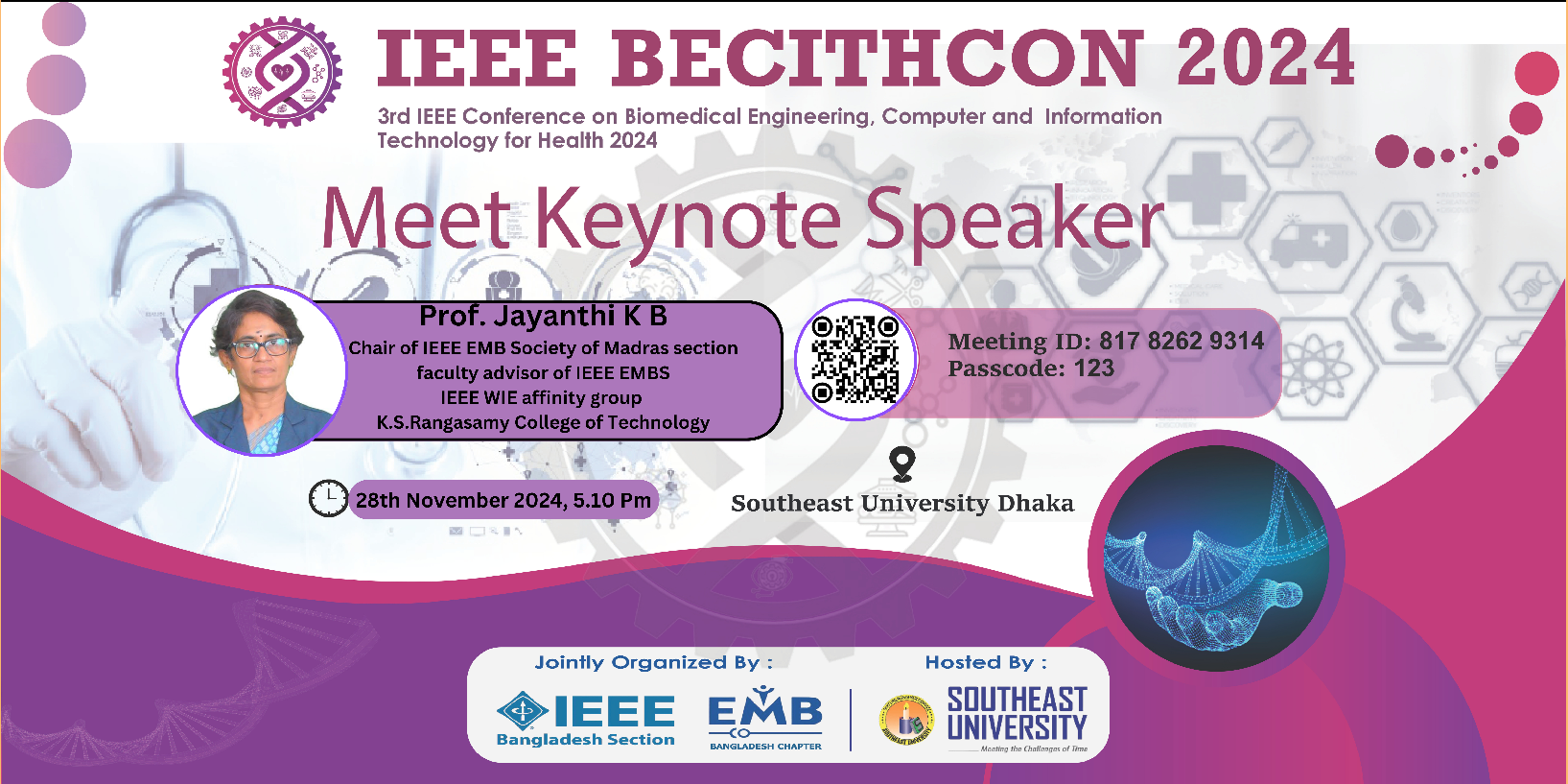
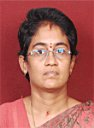
Dr. K. B. Jayanthi has more than 30 years of teaching experience. She graduated in the discipline of Electronics and Communication Engineering from Government College of Engineering, Salem in 1994. She completed her post-graduation in Applied Electronics in Government College of Technology in 1999. She received her Ph.D. from Anna University Chennai in 2008. Her research area is Medical Image Processing. She has to her credit a number of papers published in peer reviewed International Journals like Elsevier, Springer, IET, Wiley, Actapress etc.
She has presented papers in a number of International and National Conferences. She has presented papers in IEEE flagship onferences like EMBC, GlobalSIP and TENCON in various countries like Thailand, France, Hongkong, Germany, Malaysia and Florida, San Diego, Las Vegas in US. All these trips were sponsored by various funding agencies like DST, DBT, UGC. She was the invited speaker for the track ‘Signal and Image Processing in IEEE TENCON 2017 and has chaired the session on Signal Processing in TENCON 2022 and in the 4th International conference on Frontiers in Signal Processing held in Poitiers, France. She has completed three projects on Healthcare in Imaging and AI Technology as Principal Investigator. And one project on Precision Agriculture as Co investigator. The projects are funded by AICTE, UGC and DBT. Currently she has a project on AI based healthcare support for cancer patients and another on block chain technology for agriculture produce. Funded by SERB and ICSSR. The total funding is to the tune of 10 million INR.
She has conducted staff development programs which are funded by organizations like AICTE & Department of Biotechnology. She has organised a number of conferences, workshops and seminars. She has received funding to the tune of 4 million INR from various funding agencies like AICTE, DBT, DST, MOES, SERB and UGC for organizing such programs. She has attended the ‘Women in Engineering: International leadership conference’ on ‘LEAD BEYOND’ in May 2014 in San Francisco in US. She represented the college to receive the Best New Student Chapter Award from IEEE EMB society in the 39th Annual International Conference of EMBS held in Jeju islands, South Korea on 12th July 2017. She was the recipient of the prestigious Lilavati Award from AICTE, NewDelhi for the year 2022. She is currently the Chair of IEEE EMB Society of Madras section and faculty advisor of IEEE EMBS and IEEE WIE affinity group of the institution.
Talk Title: Overcoming Catastrophic Forgetting in Domain Adaptation in medical image classification

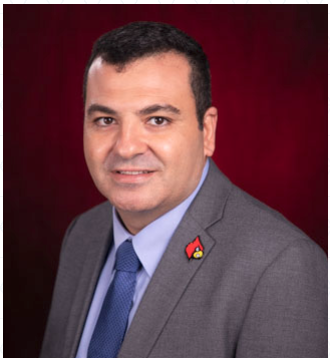
Ayman El-Baz
Chairperson, Professor & Distinguished Scholar
Talk Title: The Role of AI in Medicine and Healthcare and Its Impact on Advancing a Knowledge-Based Economy.
Brief abstract: Economy Artificial intelligence (AI) is reshaping the landscape of medicine and healthcare, driving progress that supports the growth of a knowledge-based economy. Through AI-powered tools, healthcare systems achieve greater diagnostic accuracy, personalized treatment approaches, and optimized operational workflows, leading to enhanced patient outcomes and cost-efficiency. Machine learning algorithms and advanced data analytics enable clinicians to make data-driven decisions and predict patient outcomes with high precision. AI also accelerates drug development, refines medical imaging, and enhances patient monitoring, fostering innovation and reducing the timeline for medical advancements. This integration of AI not only enhances clinical practice but also catalyzes economic development by opening new sectors, enhancing workforce skills, and promoting interdisciplinary collaboration. Consequently, the adoption of AI in healthcare serves as a pivotal factor in advancing a sustainable, knowledge-driven economy and positioning societies for future technological and healthcare leadership.
Ayman El-Baz, Ph.D, Professor in the Department of Bioengineering at the University of Louisville, KY. Dr. El-Baz has twelve years of hands-on experience in the fields of bioimaging modeling and computer-assisted diagnostic systems. He has developed new techniques for analyzing 3D medical images. His work has been reported at several prestigious international conferences (e.g., CVPR, ICCV, MICCAI, etc.) and in journals (e.g., IEEE TIP, IEEE TBME, IEEE TITB, Brain, etc.). His work related to novel image analysis techniques for lung cancer and autism diagnosis have earned him multiple awards, including: first place at the annual Research Louisville 2002, 2005, 2006, 2007, 2008, 2010, 2011 and 2012 meetings, and the “Best Paper Award in Medical Image Processing” from the prestigious ICGST International Conference on Graphics, Vision and Image Processing (GVIP-2005). Dr. El-Baz has authored or coauthored more than 300technical articles.
Day 2
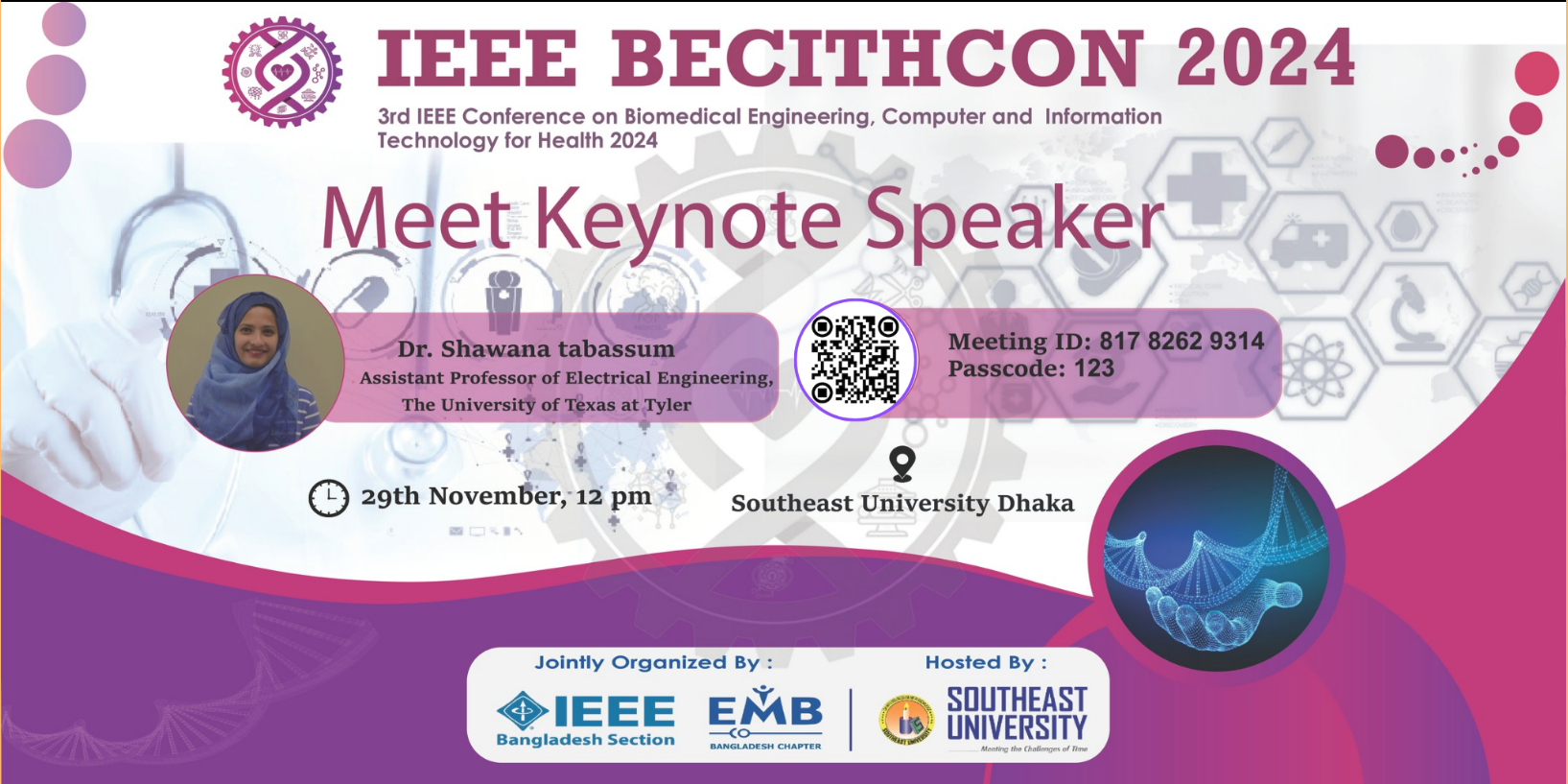
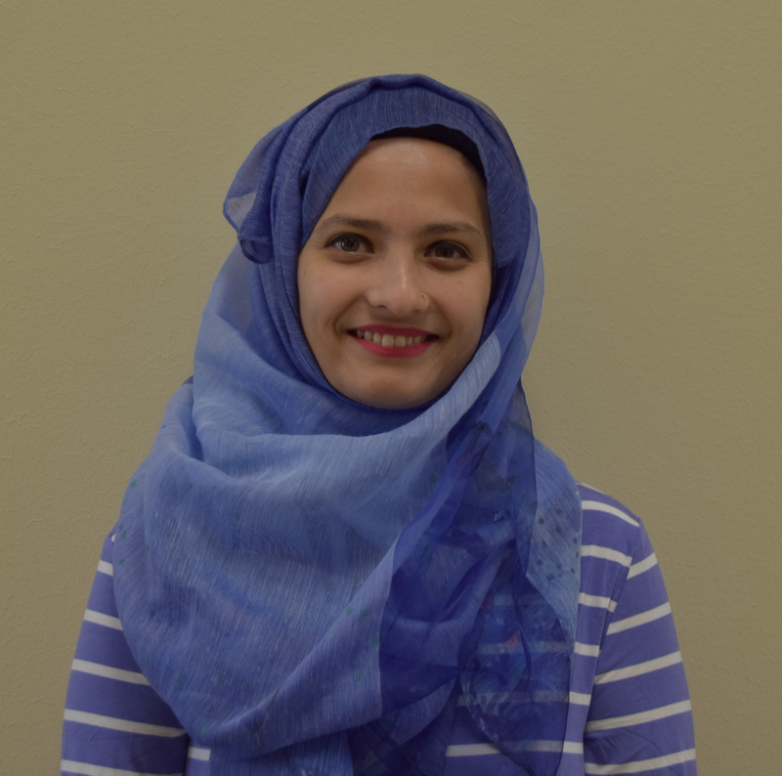
Shawana Tabassum
Assistant Professor of Electrical Engineering
Dr. Shawana Tabassum joined as an Assistant Professor in the Department of Electrical Engineering at UT Tyler in Fall 2020. She completed her postdoctoral training from Iowa State University, Ames, Iowa, in 2020 and obtained her Ph.D. in Electrical Engineering from Iowa State University in 2018. Dr. Tabassum earned her Bachelor of Science (B.Sc.) in Electrical and Electronics Engineering from Bangladesh University of Engineering and Technology, Dhaka, Bangladesh, in 2014.
Talk title: Wearable Sensors for Sustainable Agriculture and Precision Healthcare
Bio: Dr. Shawana Tabassum is an Assistant Professor at the University of Texas at Tyler, where she directs the Center for Smart Agriculture Technology. She received her Ph.D. degree in electrical and computer engineering from Iowa State University, Ames, IA, in 2018. Her research focuses on the development of flexible and wearable sensors using micro/nanoelectronics and photonics technologies. She applies this expertise to various areas, including biomedicine, plant sciences, sustainable and climate-smart agriculture, and environmental monitoring. Over the past 4 years, Dr. Tabassum secured more than 10 external research grants from NSF, USDA, NASA, CDC, VentureWell, American Association of University Women, and Trauma Research and Combat Casualty Care Collaborative as a PI or Co-PI. Dr. Tabassum’s notable awards and honors include the Young Professionals Award (2023), the Curtis W. McGraw Research Award (2023), and Science Breakthrough of the Year: Emerging Talent Award from the Falling Walls Lab Berlin global finale (2020).
Brief abstract: This talk will highlight the wearable sensors developed at the Center for Smart Agriculture Technology at UT Tyler for applications in agriculture and healthcare. In agriculture, these sensors enable precise and timely detection of key biomolecules, allowing producers and researchers to identify crop stresses early—before visible symptoms arise—and optimize resource use to reduce stress-related growth and yield losses. In healthcare, these sensors support real-time, in-situ monitoring to provide precision care and timely interventions for warfighters.
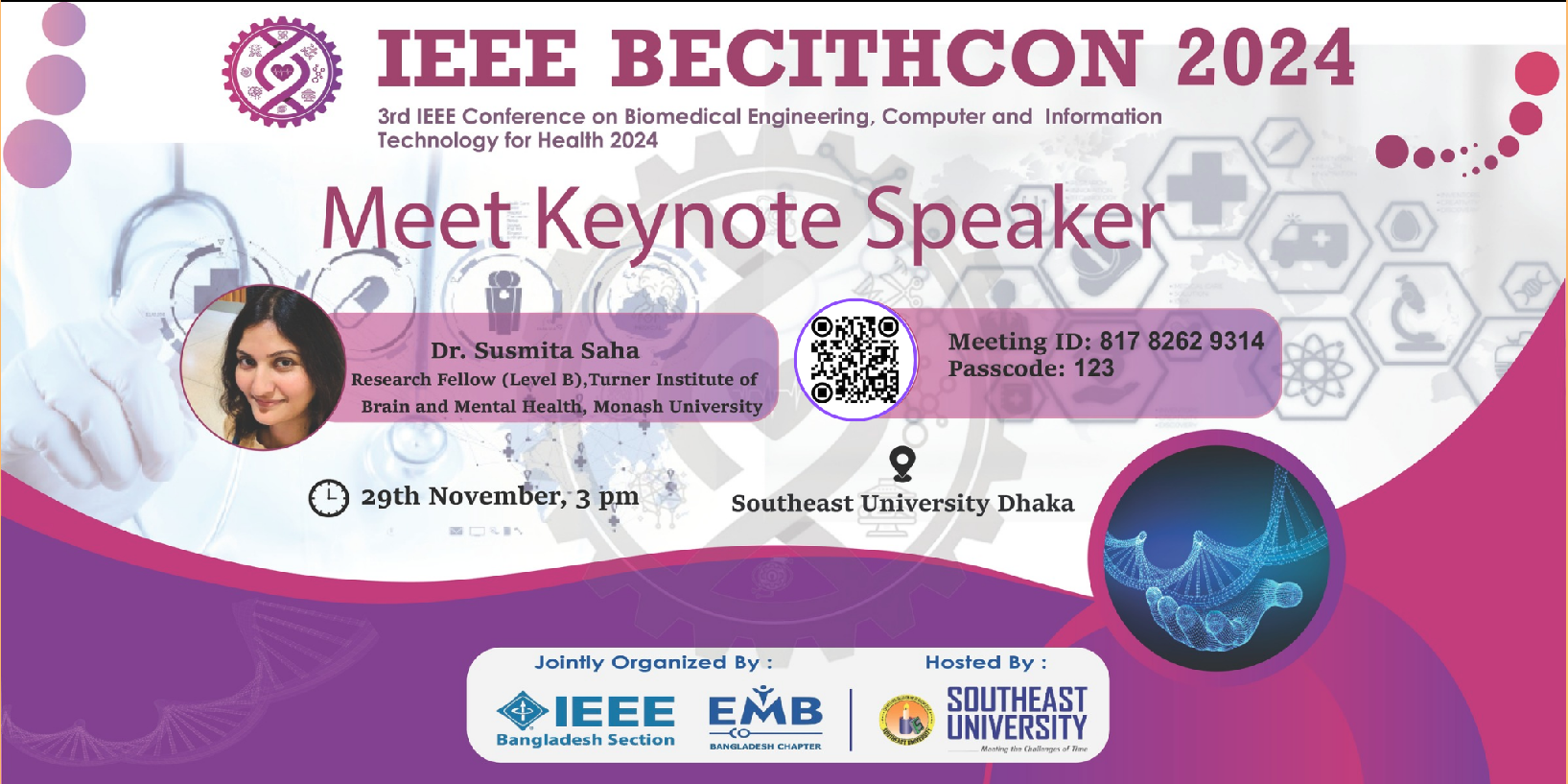
Talk title: Machine learning in rare disease research
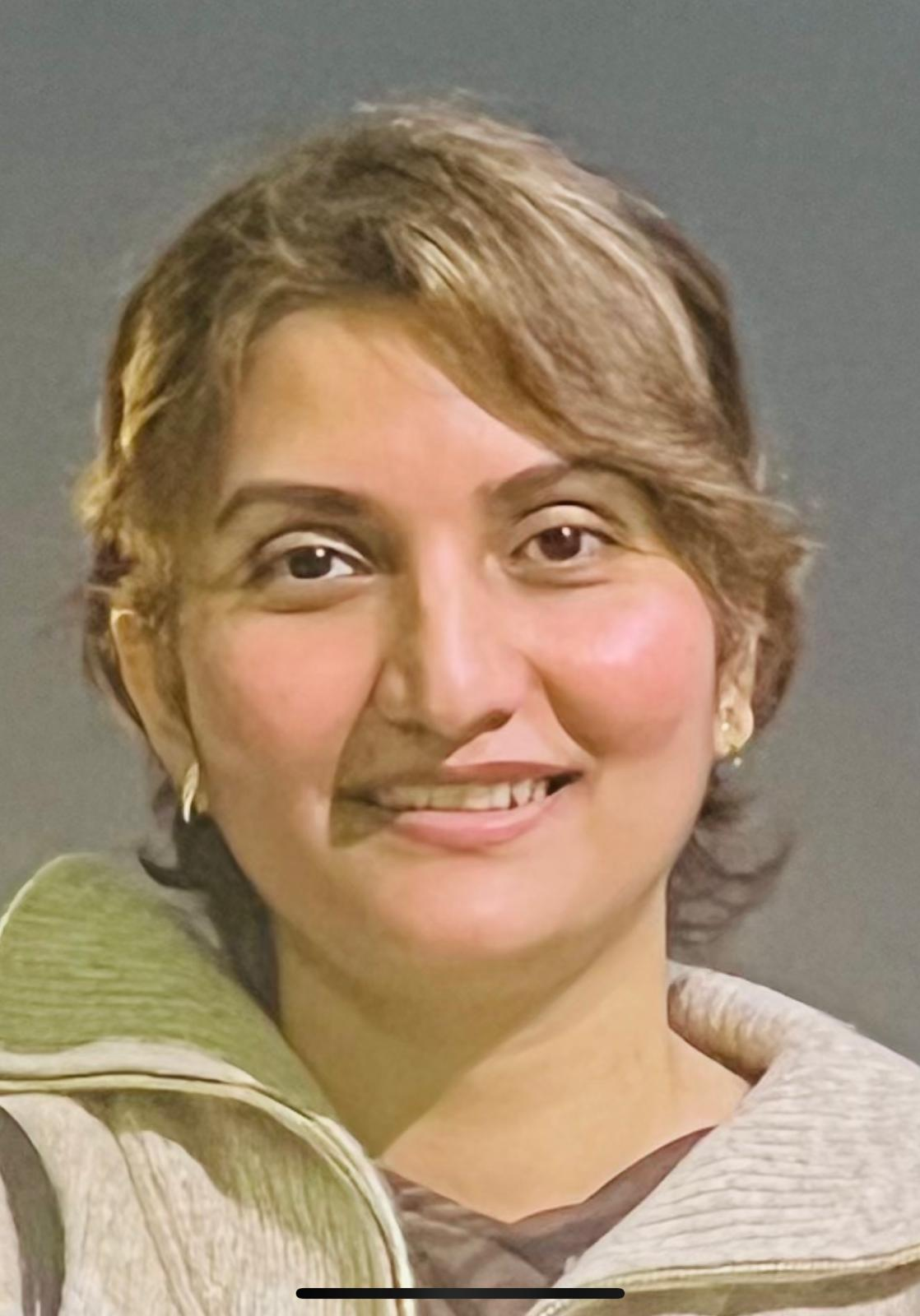
Bio:
Susmita Saha is a distinguished Research Fellow at the Turner Institute for Brain and Mental Health and Deputy Director of the Ageing and Neurodegeneration Program at the School of Psychological Sciences, Monash University. She earned her undergraduate degree in Electrical and Electronics Engineering from Bangladesh University of Engineering and Technology (BUET) and completed her PhD in Biomedical Engineering at the University of Melbourne, Australia. Following her PhD, she undertook postdoctoral fellowships at IBM Research Australia and CSIRO (Australia’s National Science Agency). Her research focuses on the intersection of artificial intelligence, medical imaging, multimodal data, and rare neurological disorders. Through collaborations with leading academics, clinicians, and biopharmaceutical companies, she aims to revolutionise clinical trial designs, accelerating drug development for rare movement disorders. Dr. Saha has made significant contributions to academia and industry, with numerous publications, patents, and research funding. She also actively supervises PhD and honours students on AI-focused projects. In addition to her academic and research pursuits, she holds key leadership roles in IEEE as Secretary of the Victorian Section, Vice-Chair of Women in Engineering VIC Section, and Chair of the IEEE Victorian Special Interest Group in Humanitarian Technology (SIGHT).
Talk abstract: Machine learning (ML) is an emerging and promising field in the study of rare diseases, yet it faces considerable challenges. Rare movement disorders, such as Hereditary Cerebellar Ataxia and Huntington’s Disease, exemplify these challenges with their small and imbalanced datasets, highly heterogeneous symptoms, diverse disease progression patterns, and noisy ground truth labels arising from limited understanding. These disorders are burdened by the absence of cures, limited disease-modifying therapies, and high failure rates in clinical trials, often due to poorly designed studies and gaps in knowledge about underlying disease mechanisms.
This talk will present how machine learning can address these critical issues by showcasing recent advancements in its application to rare movement disorders. The speaker will discuss innovative ML-driven approaches that enhance diagnosis, monitoring, prognosis, and treatment strategies. By leveraging AI and ML to analyse complex datasets, identify meaningful patterns, and predict disease progression, these tools offer transformative potential in addressing the urgent need for more effective and targeted clinical solutions for rare movement disorders.
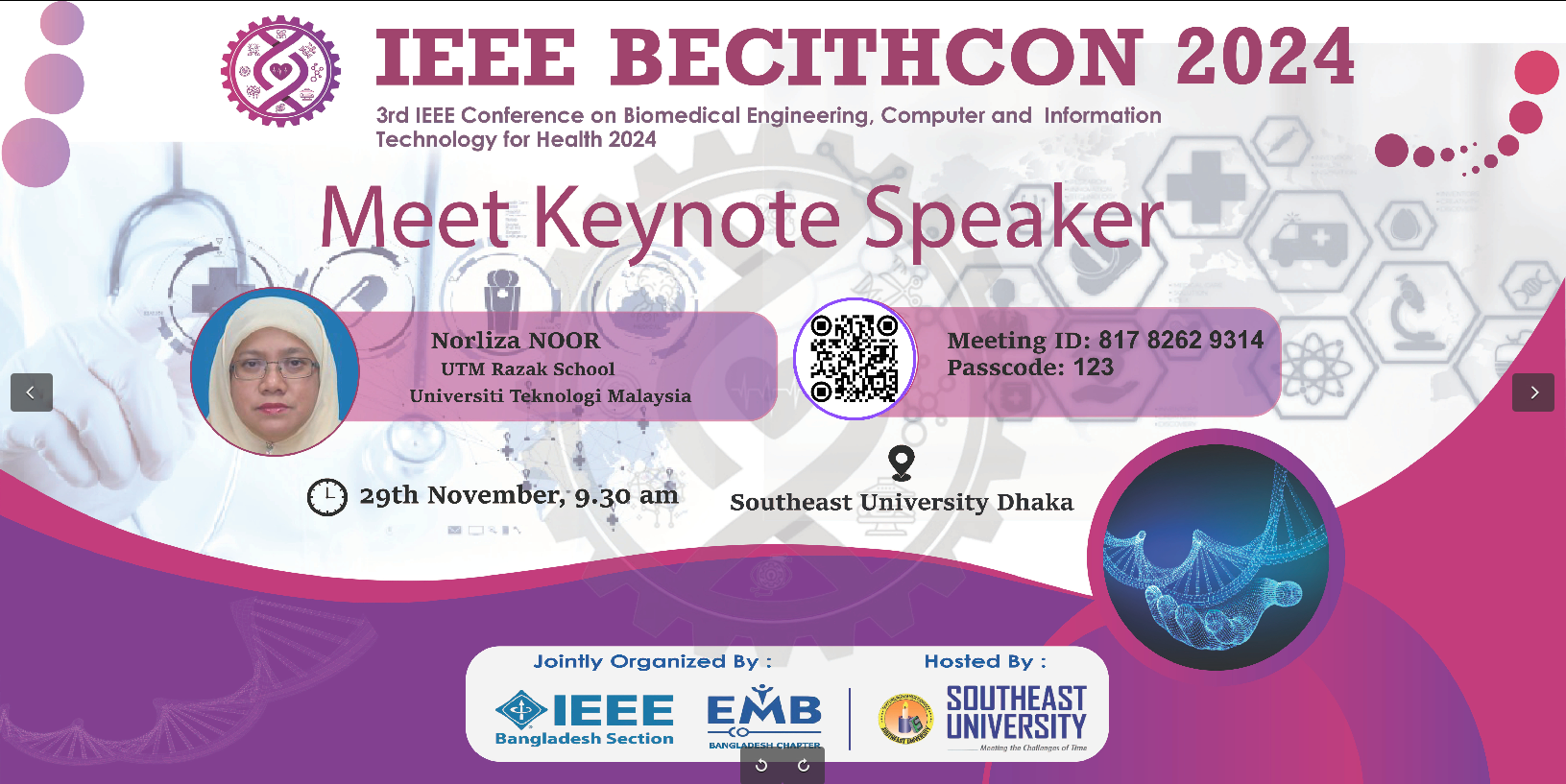
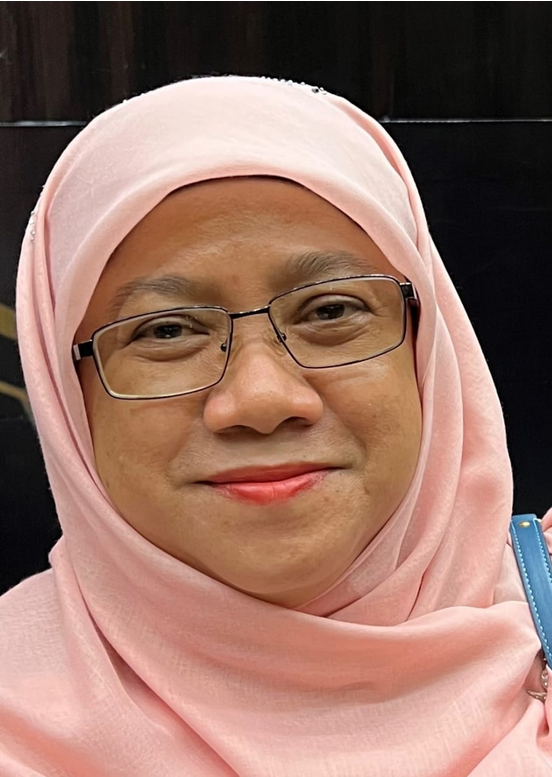
Norliza Mohd Noor was a Professor in Razak Faculty of Technology and Informatics, Universiti Teknologi Malaysia (UTM), Kuala Lumpur Campus. Currently, she is attached to Advanced Technology Solution (ATES) Sdn Bhd as one of the Director. She received her B.Sc. in Electrical Engineering from Texas Tech University in Lubbock, Texas, and Master (by research) and PhD both in Electrical Engineering from UTM. She was a member of UTM assessors’ panel for Programme Accreditation, and a member of Malaysian Qualifications Agency (MQA) assessors’ panel. She has taught courses Intelligent Data Analysis and Intelligent System for the MSc Systems Engineering program. Her research areas were in machine learning, deep learning for medical and industrial applications. She has obtained 3 patents registered in Malaysia and has another 1 has been filed. She is a senior member of IEEE. In 1998-2001, she held several key positions in IEEE Malaysia Section. She was the IEEE Malaysia Section Chair for 2013-2014. She was appointed in various committee at R10 and MGA level among others, IEEE R10 Individual Benefits & Services Coordinator 2015-2016, IEEE MGA GUOS committee 2015-2016, IEEE EAB-SERC 2017, MBPAC 2017, and IEEE EAB-CPC 2019-2020. She was a member of the IEEE MGA Training Committee (2022-23), IEEE EAB CEC and IEEE HAC Project Monitoring Committee. Currently, she is the Chair or EAB Credentialing Committee.
Talk title: DRONES AND DEEP LEARNING INTEGRATED SYSTEM FOR ENHANCED MELON CROP DISEASE SURVEILLANCE IN CONTROLLED ENVIRONMENTS
Talk Synopsis: In modern agriculture, managing crop health is vital for maximizing yield and ensuring food security. This project explores the integration of advanced technologies—specifically drones and deep learning systems—to enhance disease surveillance for melon crops in controlled environments, such as greenhouses or vertical farms. The primary goal is to develop a comprehensive, automated monitoring system that can detect, diagnose, and track diseases in melon crops more accurately and efficiently than traditional methods.
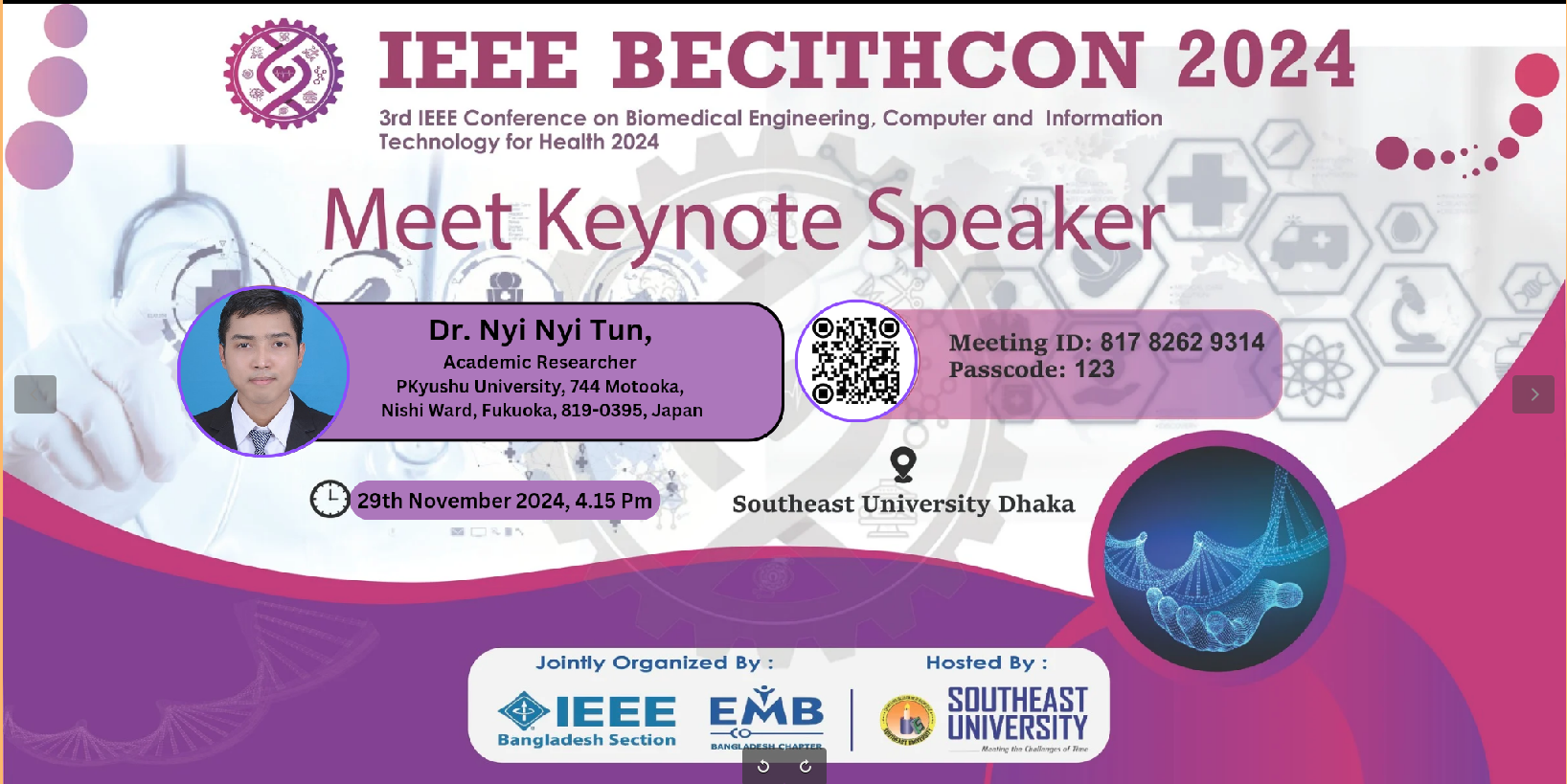

Dr. Nyi Nyi Tun, Ph.D. (Information Science), Kyushu University, Japan
Bio:NYI NYI TUN (Dr. NYI) received a bachelor’s in Mechatronic Engineering from the Department of Mechatronics, Technological University, Mandalay, Myanmar, in 2013. He was one of the research candidates for the JICA EEHE projects’ fund for the year 2015. He obtained a master’s in mechatronic engineering from Mandalay Technological University, MTU, Myanmar, in 2016. He was also a Marubeni- Myanmar scholarship student in 2016. Among several scholarships, he was selected as a Ph.D. candidate at the Graduate School of Information Science and Electrical Engineering at Kyushu University with a JICA Innovative Asia scholarship. He joined the Neuroinformatics and Neuroimaging Laboratory at Kyushu University in 2017. For his Ph.D. studies, he worked on Brain-Computer Interface (BCI)-related research and the analysis of functional coupling and synchronization between brain and muscle signals at Kyushu University. Then, he graduated with a Doctor of Philosophy (Ph.D. in Information Science) in March 2022 from Kyushu University. He was a specially appointed researcher at the Nagoya Institute of Technology from April 2022 to March 2023. He was working as a postdoctoral academic researcher at the Department of Electronics, Graduate School, and Faculty of Information Science and Electrical Engineering, Kyushu University. Currently, he is working as a postdoctoral researcher at the Department of Electrical and Computer Engineering, School of Engineering, University of Peloponnese, Greece. His research relates to biomedical and neural circuits in fusion with mechatronic engineering
Talk title : Brain-Muscle Functional Interaction Analysis and its Potential Direction for Brain-Computer Interface (BCI)
Abstract : In order to understand the basic principles of brain and muscle function for future Brain- Computer Interface (BCI) technology, it is important to understand the cortico-muscular functional interaction and its neurophysiological principles. In this study, four different motor performances were applied, such as real hand grasping movement (RM), movement intention (Inten), motor imagery (MI), and only looking at the virtual hand in a three-dimensional head-mounted display (3D-HMD) (OL). This study involved thirteen healthy right-handed participants from Kyushu University. We explored the cortico- muscular functional interaction with the linear coherence method, the nonlinear mutual information method, and the time-variant Granger causality. The objectives of this study are to investigate the functional interaction of brain-muscle signals and their coupling based on four different motor tasks, to explore the anatomical and neurophysiological principles of brain and muscle function that can lead to cortico-muscular interaction, and to discover consistent and reliable facts about cortico-muscular interaction based on unresolved research issues for Brain-Computer Interface (BCI)


